
Lake Eacham and Lake Barrine are two volcanic crater lakes on the Atherton Tablelands, around an hour to an hour and a half from Cairns by car. Both sit within Crater Lakes National Park, surrounded by World Heritage-listed rainforest, and are among the most popular stops on a Tablelands day trip.
The two lakes are only about a 10 minute drive apart but offer quite different experiences. Lake Eacham is the go-to for swimming and picnics, while Lake Barrine draws visitors for its heritage teahouse, boat cruise, and longer rainforest walk. This guide covers what each lake offers, how they compare, and how to fit them into a Tablelands day from Cairns.
What Are the Crater Lakes?
Lake Eacham and Lake Barrine are maar volcanic crater lakes, formed by eruptions caused by superheated groundwater roughly 10,000 years ago. The craters filled with rainwater over time, creating two deep, clear freshwater lakes surrounded by dense tropical rainforest.
The lakes sit on the northern Atherton Tablelands, between the towns of Yungaburra and Malanda. No streams flow into or out of either lake, which is why the water is so clear. Both are around 65 metres deep and there is no entry fee to visit. You can see how the crater lakes fit into a broader Tablelands day through our Kuranda and Tableland tours page.
Lake Eacham
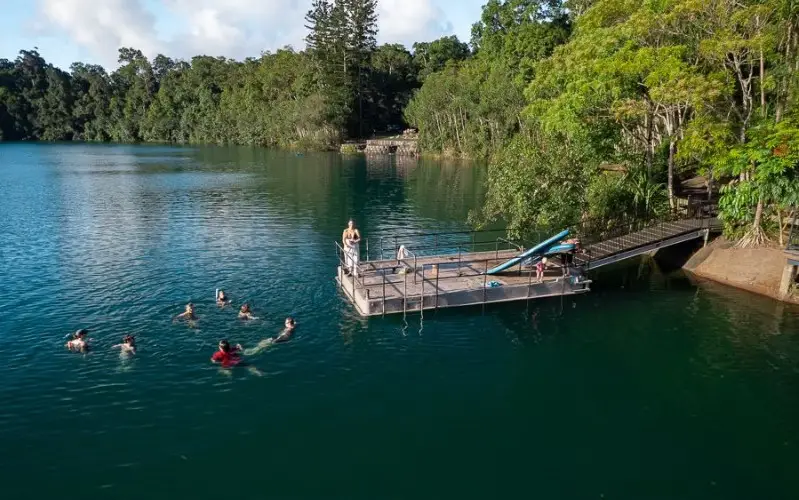
Lake Eacham (also known by its Indigenous name Yidyam) is the smaller of the two crater lakes and the one most visitors come to swim in. The water is clear, calm, and cool, and the rainforest comes right to the water’s edge on most sides.
The main access point has a grassed area with picnic tables, shelters, free electric barbecues, and toilets. A pontoon extends into the water for swimmers. No motorised boats are permitted on the lake, so the water stays calm and quiet.
There are no saltwater crocodiles in the lake, and the freshwater conditions make it one of the safest swimming spots in the region. Turtles are commonly seen in the shallows.
A flat walking track circuits the lake, covering roughly 3 kilometres and taking about an hour at a steady pace. The path passes through rainforest with filtered views of the water and is manageable for most fitness levels. Allow around one to two hours at Lake Eacham if you plan to swim and walk the circuit.
Lake Barrine
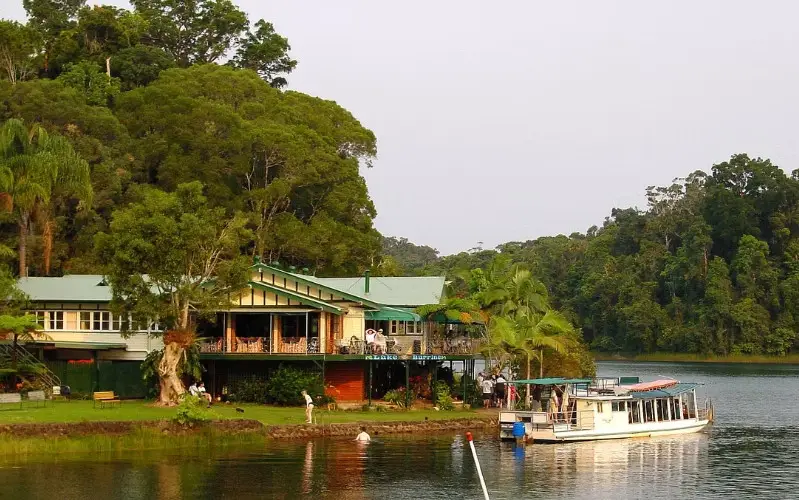
Lake Barrine is the larger of the two crater lakes and has a different feel to Eacham. The focus here is less on swimming and more on the heritage teahouse, the boat cruise, and a longer rainforest walk.
The Lake Barrine Teahouse is a heritage timber building on the shore, originally built in the 1920s and still run by the same family. It serves Devonshire teas, meals, and coffee with views over the lake. A boat cruise operates from the teahouse, running for about 45 minutes with commentary on the lake’s volcanic origins, the surrounding rainforest, and the wildlife. It’s a relaxed way to see the lake without walking the full circuit.
The walking track around Lake Barrine covers roughly 5 kilometres and takes approximately one and a half to two hours. The track passes through mature rainforest and includes two giant Kauri pine trees estimated to be over 1,000 years old. These are a short walk from the car park and worth seeing even if you don’t complete the full circuit.
Swimming is possible at Lake Barrine but less common. Most visitors come for the food, the cruise, and the rainforest rather than the water.
Which Lake Should You Visit?
If you only have time for one, the choice depends on what you’re after. Lake Eacham is the better option for swimming, picnics, and a shorter visit with good facilities. Families with children tend to prefer Eacham for the calm water, grassed area, and barbecue setup.
Lake Barrine suits visitors who want the teahouse experience, the boat cruise, and a longer rainforest walk. It appeals to older visitors, food-focused travellers, and anyone who prefers a more structured stop with a meal or cruise included.
Both lakes are worth visiting, and since they’re only about 10 minutes apart by car, doing both in a single morning or afternoon is practical. A common approach is to swim at Eacham first and then drive to Barrine for the teahouse and a walk.
Wildlife at the Crater Lakes
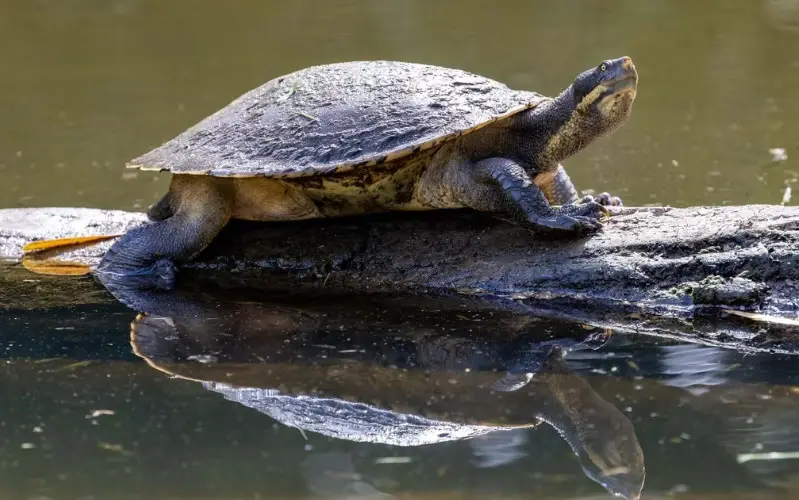
Turtles are the most reliably spotted wildlife at the lakes. They’re commonly seen in the shallows at Lake Eacham, particularly near the swimming area. Birdlife is varied around both lakes, with scrub turkeys, kingfishers, and other rainforest species frequently seen along the walking tracks.
Platypuses are present in the area but are elusive and rarely seen at the lakes themselves. The best chance of spotting one is at dawn or dusk at Peterson Creek in nearby Yungaburra, about a five minute drive from the lakes. The Lumholtz tree kangaroo is also found in the surrounding rainforest, though sightings are rare and usually require patience and quiet early mornings.
How to Get There from Cairns
The crater lakes are about an hour to an hour and a half from Cairns by car. The most common route is via the Gillies Highway, which climbs steeply through rainforest to the Tablelands. Once at the top, the lakes are signposted and accessible via sealed roads with car parks at both.
Lake Barrine is the first of the two lakes you’ll reach when driving up the Gillies Highway. Lake Eacham is a few minutes further on. Both have free parking and are open year-round.
Guided Tablelands tours from Cairns typically include one or both lakes as part of a full-day itinerary. If you’re planning how to structure your days across the reef, rainforest, and Tablelands, our first-timer’s guide to the Great Barrier Reef covers how to balance the main Cairns experiences.
Combining Crater Lakes with Other Tablelands Stops
The crater lakes sit on the northern Tablelands and combine well with other stops in the region. The Millaa Millaa waterfall circuit is around 30 to 40 minutes’ drive south and is the most common pairing with a crater lakes visit. Our Atherton Tablelands waterfalls guide covers the circuit and other waterfalls in detail.
Yungaburra village is about five minutes from the lakes and worth a short stop for its heritage buildings, local shops, and the Peterson Creek platypus viewing area. For visitors interested in food and produce, the Tablelands has dairy farms, coffee plantations, and distilleries scattered along the driving route. Our guide to Atherton Tablelands food and produce experiences covers the main options.
If you’re approaching from the north or returning via a different route, Kuranda village and the Skyrail and Scenic Railway experiences can be combined with a Tablelands day, though this makes for a full itinerary.
Allow one to two hours per lake depending on whether you swim, walk, or stop for the teahouse and cruise. A full Tablelands day from Cairns that includes both lakes, a waterfall or two, and a food stop typically covers three to five stops total. The team at the Reef Info Visitor Centre on Abbott Street in Cairns can help with route planning if you’re self-driving, or recommend a guided tour that covers the highlights.
Related reading: Atherton Tablelands Waterfalls Guide
Plan Your Crater Lakes Visit
Lake Eacham and Lake Barrine are two of the most scenic and accessible stops on the Atherton Tablelands. Whether you spend an hour swimming at Eacham or a morning between both lakes with a Devonshire tea at Barrine, the crater lakes are a rewarding part of any Tablelands day trip.
Browse Tablelands and Kuranda day tours from Cairns to compare guided options that include the crater lakes, waterfalls, and local produce stops.
