
Most people who try snorkelling for the first time are surprised by how simple it is. The technique takes about ten minutes to get comfortable with, the gear is provided on every reef tour, and the conditions at the Great Barrier Reef are well suited to beginners. The barrier is almost always confidence, not ability.
If you are heading out to the reef from Cairns and have never snorkelled before, here is what you actually need to know.
What Snorkelling Is (and What It Is Not)
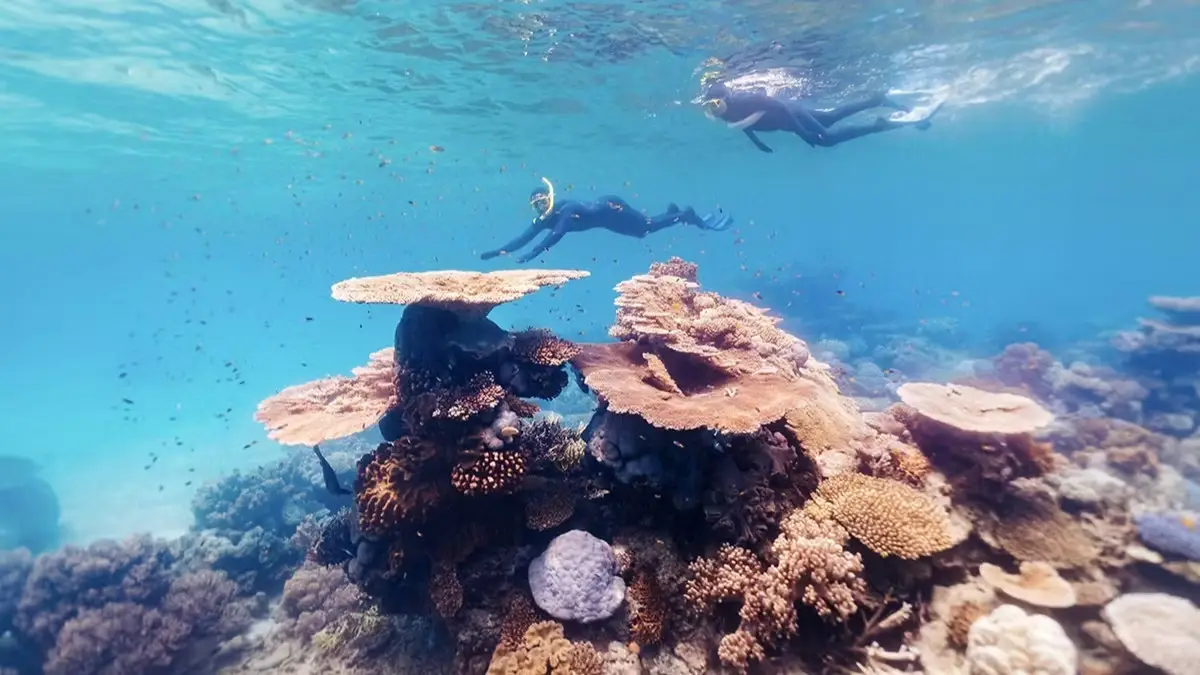
Snorkelling means floating face-down on the surface of the water with a mask over your eyes and nose, and a tube sticking up from your mouth that lets you breathe while your face is submerged. You stay on the surface. You do not hold your breath. You do not need to go deep.
Most first-timers imagine snorkelling involves diving down and holding their breath, which sounds exhausting and uncomfortable. It does not. The coral gardens and marine life on the Great Barrier Reef sit in the top few metres of water, so the view from the surface is genuinely excellent. The fish come to you.
The Gear You Will Be Using
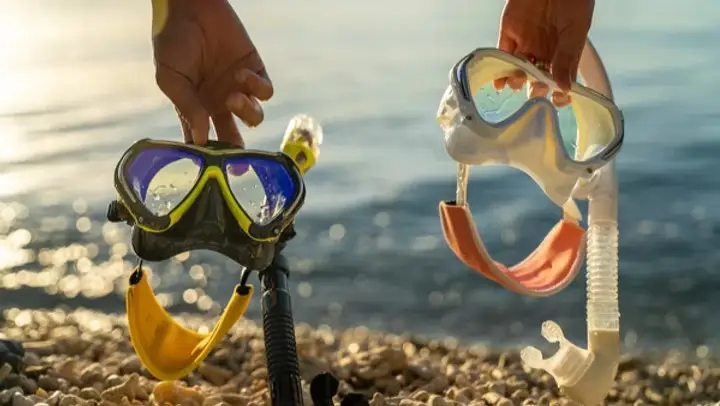
Every reef tour from Cairns supplies snorkel gear as part of your day. You do not need to buy or bring anything.
| Equipment | What it does |
| Mask | Covers eyes and nose, creates a watertight seal so you can see clearly underwater |
| Snorkel | Curved tube attached to your mask that lets you breathe at the surface with your face down |
| Fins | Worn on your feet, help you move through the water with minimal effort |
| Stinger suit | Provided on all tours during stinger season (October to May), adds a small amount of buoyancy |
| Flotation vest | Available on request, keeps you on the surface with no effort, ask for one if you want it |
Getting the mask fit right before you get in the water makes a significant difference. To test the seal, put it on without the strap, breathe in gently through your nose, and let go. If it stays on your face, the seal is good. If you can feel air leaking in at the edges, ask the crew to help you find a better fit before you enter the water.
If you are not a confident swimmer, ask for a flotation vest. It makes floating completely effortless and lets you focus on the reef rather than staying afloat. Nobody on the boat will think anything of it.
How to Breathe Through the Snorkel
This feels strange for the first few minutes and then becomes completely automatic. The technique is straightforward:
- Put the mouthpiece between your teeth and seal your lips around it
- Breathe slowly and steadily through your mouth only, in and out
- Keep your nose relaxed inside the mask (do not try to breathe through it)
- If water gets into the tube, one short sharp puff of air out clears it immediately. This is called purging and every snorkeller does it
- If water gets into your mask, lift your head above the surface and tilt the bottom of the mask slightly to let it drain out
The instinct when your face goes underwater is to tense up and breathe quickly. Slow down deliberately. One slow breath in, one slow breath out. Within a minute or two it will feel normal.
The Right Body Position
The most common beginner mistake is not lying flat enough. Snorkelling works best when your whole body is horizontal, face down, with your fins trailing behind you.
A lot of people instinctively hold their heads up or let their legs sink, which tilts the body and makes staying on the surface much harder work than it needs to be. Relax into the water. Let it support you. Slow, long kicks from the hip rather than fast short kicks from the knee. You should not feel tired after five minutes.
What Happens on the Day
Guided reef tours from Cairns include a snorkel briefing before anyone gets in the water. The crew will cover:
- How to fit and use the mask, snorkel, and fins
- How to clear water from the mask or snorkel tube
- What to do if you feel uncomfortable in the water
- Reef etiquette including not touching coral or marine life
- Where you can and cannot swim around the pontoon
Take the briefing seriously even if some of it seems obvious. The guides give these every day and are very good at making first-timers feel prepared.
Once you are in the water, guided snorkel tours take small groups with a leader who points out turtles, reef fish, and coral formations and stays close if anyone needs support. This is the best option for beginners. If you prefer to snorkel independently around the pontoon that is also available, but first-timers generally get more out of a guided group.
Common Things That Go Wrong (and How to Fix Them)
| Problem | Fix |
| Mask keeps leaking | Almost always a fit issue. Do the seal test on board before entering the water and swap sizes if needed |
| Feeling panicky in the water | Roll onto your back, look at the sky, breathe normally for a minute. There is no rush, take your time |
| Getting tired quickly | Slow your kicks right down. Long strokes from the hip, not the knee |
| Water keeps getting in the snorkel | Give a short sharp puff of air out. This clears the tube in one breath |
| Foggy mask | Spit inside the lens before entering the water, rinse briefly, then put it on |
Do You Need to Be a Swimmer?
Basic water confidence helps, but snorkelling does not require strong swimming ability. With a flotation vest, staying on the surface requires almost no effort. If you can float on your back and feel calm in open water, you can snorkel.
If water makes you genuinely anxious or you cannot swim, there are other ways to experience the reef without getting in the water. Glass-bottom boat tours, semi-submersible rides, and underwater observatories are standard on most outer reef pontoons. Our guide to visiting the Great Barrier Reef if you cannot swim covers all of those options in detail.
Where to Snorkel in Cairns as a Beginner
If you want to build confidence before heading to the outer reef, Green Island is the best starting point. The water around the island is shallow and sheltered, the coral is close to shore, and the crossing from Cairns is only 45 minutes on a large, stable catamaran.
For the outer reef, the large pontoon-based day tours give beginners the best support structure: calm water access, crew on hand, lifeguards on duty, and guided snorkel groups as an option.
Browse snorkelling tours from Cairns to find the right option for your group, or come into the Reef Info Visitor Centre on the Esplanade and we can match you with the right tour for your experience level.
